What it takes to embed accessibility into cinema programming
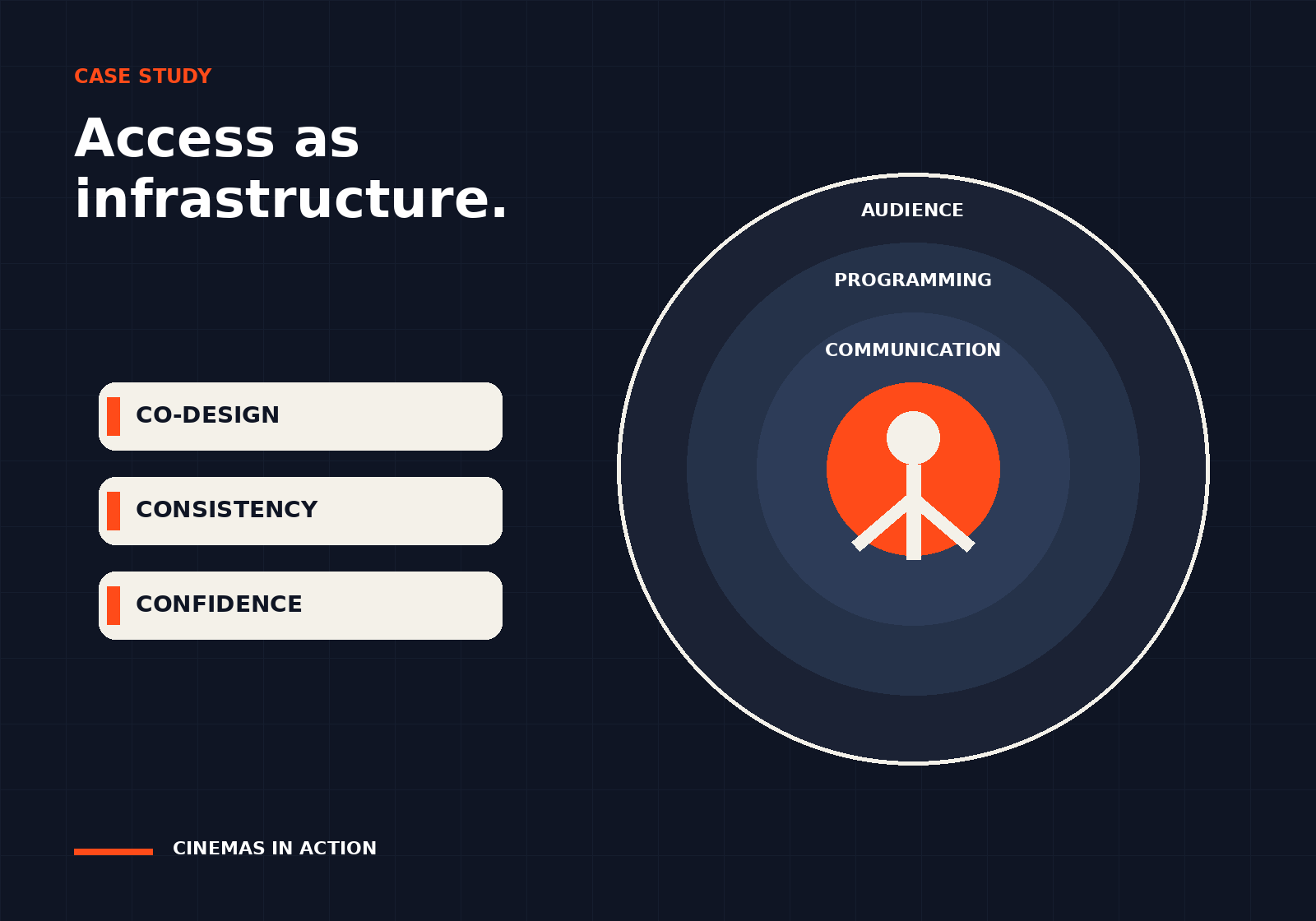
MAC Birmingham’s three-year Expanding the Frame programme treated access as a combination of programming, communication, technology, staff practice and audience dialogue.
Published 7/22/2026
The idea
Treat accessibility as a programming and operating system: involve audiences, schedule accessible work at meaningful times, improve communications and technology, learn openly from failure and repeat the offer consistently.
Evidence
ICO and MAC describe a three-year programme and multiple access interventions. MAC reports more than 7,000 third-year attendances against a 2,700 estimate, but the calculation, unique audience count, cost and counterfactual are not public.
Operator takeaway
Access grows when it becomes part of programming, marketing, staff practice and supplier conversations. A single relaxed screening cannot compensate for inconsistent information or inaccessible prime-time choices.
Try this
Run a 12-month access plan with a paid audience advisory group, three recurring accessible strands, one communication standard, a staff incident log and quarterly review of attendance and feedback.
Measure
Track accessible screenings by type and daypart, attendance, unique and repeat users, partner referrals, customer feedback, access-file failures, staff confidence, direct cost and the share of the wider programme carrying access information.
Watch out for
Ambition can outrun available access materials, staff capacity or building constraints. Publishing a strong access promise without reliable delivery can damage trust more than a modest, accurate commitment.
From events to infrastructure
Expanding the Frame set out to embed access into MAC’s cinema work over three years. The reported activity covered programming, communication, technology, staff practice and audience relationships. That matters because customers experience accessibility across the whole journey, not only through the format of one screening.
Put accessible work in meaningful slots
The practitioner case study describes prime-time accessible screenings rather than confining all provision to low-demand matinees. This treats disabled audiences as part of the mainstream programme. It also creates a harder operating test because the cinema must deliver access reliably when demand and visibility are higher.
Use multiple access formats
The programme included descriptive subtitles, relaxed and sensory screenings, subtitled trailers and work around Auracast, alongside free school activity. No single format serves every audience. The lesson is to build a portfolio and explain each experience clearly so customers can judge whether it meets their needs.
Dialogue changes decisions
The project emphasised listening to audiences and learning across the programme. A cinema should not assume that technical compliance equals a good visit. Paid advisers, partner organisations, feedback after events and regular review of customer contacts can expose barriers in arrival, signage, seating, sound, lighting and communication.
Failure is evidence
The case study records a screening of the wrong version of Past Lives. Publishing that failure is useful because it shows how easily access can collapse through file, labelling or projection processes. The response should include version checks, clear responsibilities, a pre-show confirmation and a recovery protocol for affected customers.
Reported attendance
MAC reports more than 7,000 attendances in the third year against an estimated 2,700. That suggests the programme reached meaningful scale, but the public evidence does not show unique customers, baseline attendance, cost, the contribution of each strand or how the target was calculated. It is an audience result reported by the operator, not independently verified impact.
A 12-month adaptation
A smaller cinema could start with a paid advisory group, an audit of current information and three recurring access strands. Create one communications checklist, one staff incident log and one quarterly review. Select a small number of improvements that can be delivered reliably rather than announcing every possible format at once.
Measure reliability as well as reach
Count screenings and attendances, but also record whether the promised access was delivered correctly. Track file failures, customer complaints, staff confidence, repeat attendance and requests the cinema cannot yet meet. Reliability is a core outcome because one failed screening can undo months of trust-building.
Editorial judgement
Expanding the Frame is strongest as an organisational case. Its reported attendance is encouraging, but the transferable value lies in embedding access, sharing operational learning and treating failures as data. Cinemas should copy the discipline before copying the scale.
Stay updated
Get new Cinemas in Action briefings by email.
Occasional operator briefings and new case studies — no marketing, no third parties.